Structural Drying and Dehumidification in Anoka, MN
Structural drying pulls moisture out of framing, subfloors, concrete and wall cavities after the water is gone. In Anoka, crews map the wet areas and dry them to documented readings.
(888) 432-4933Get the structure dried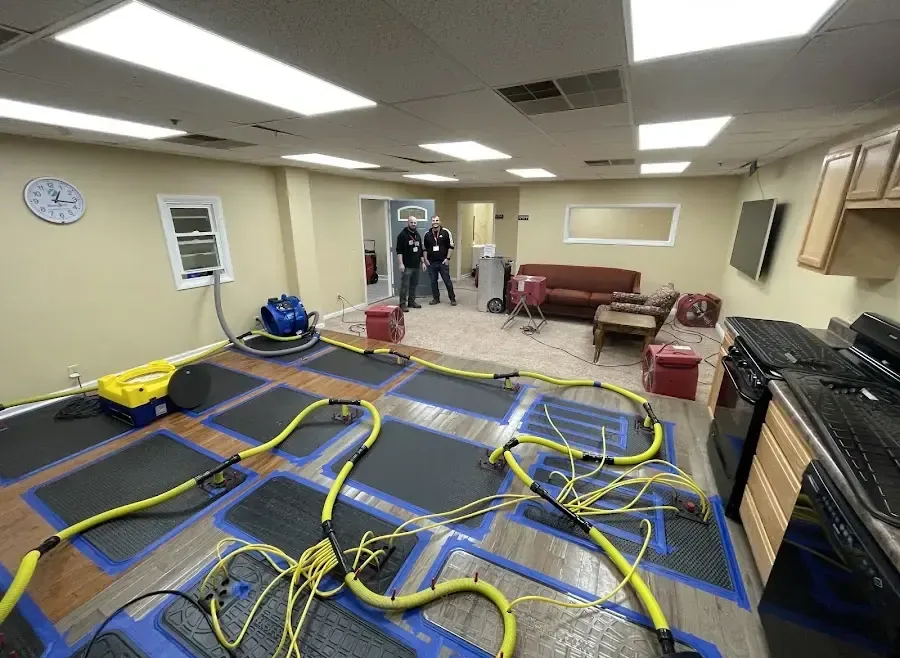
First steps for structural drying and dehumidification
- 01Stop adding water Make sure the source is closed and standing water is cleared first.
- 02Open the air Open closet and cabinet doors so air reaches wet surfaces.
- 03Do not guess dry A surface that feels dry can hold moisture, so wait for meter readings.
- 04Expect noise and days Equipment runs around the clock for several days, using power and making noise.
Removing visible water is only half the job. Wood framing, subfloors, concrete and wall cavities hold moisture that evaporates slowly, and if it stays above its dry goal it can swell, warp or grow mold. Structural drying sets up the air, heat and equipment to pull that moisture out on a measured schedule. Time matters because drying that stalls lets moisture settle in.
What does structural drying and dehumidification cost in Anoka, MN?
Drying cost follows the number of rooms, the materials involved and the days equipment runs. Light moisture in one room is the smallest job, while hardwood, concrete and deep wall cavities need heavier equipment and longer monitoring.
One room, light moisture
- Moisture map made
- Air movers and LGR unit
- Daily logs kept
Several rooms or a basement
- Containment where needed
- Several dehumidifiers
- Wall cavities dried
Hardwood or concrete, deep moisture
- Desiccant drying
- Drying mats placed
- Extended monitoring
Ranges are typical, not a quote: the water category, square footage, material class and how fast drying started move the number most. The water damage cost calculator gives a closer range.
How structural drying and dehumidification is handled, step by step
The tech who does the walkthrough maps moisture before any equipment goes down, and the equipment stays until the readings say dry.
Map
Meters and a dry reference show wet materials.
Remove
Materials that cannot dry are removed.
Equip
Dehumidifiers, air movers and mats follow the plan.
Monitor
Readings are logged daily until goals are met.
How the drying is planned
A moisture map comes first, with readings on every wet surface and a dry reference taken from unaffected rooms. Equipment is then sized to the volume of air and the wet area, and each machine is placed where the map shows it will do the most.
Basement flooding cleanup and burst pipe jobs both hand off to this stage once the water is out.
Equipment on a typical job
- LGR dehumidifiers that pull water from the air
- Air movers aimed along walls and floors
- Drying mats for hardwood and subfloors
- Desiccant units for cold or very dry targets
Readings are logged each visit and equipment is adjusted, since the drying curve changes after the first days.
River country moisture
The surrounding region is described as sandy, well drained soil with organic soils in the low spots, and the Rum River and Mississippi River floodplain adds river moisture, so the crew reads each building instead of assuming where water sits.
Structural drying and dehumidification across Anoka and nearby communities
Structural drying runs wherever water has soaked a building in the city, including older homes on Christian Hill and downtown, townhomes at RiversPointe, apartments, offices and the Enterprise Park area, throughout the service area in ZIP 55303.
The same service nearby: structural drying and dehumidification in Andover, Blaine, Oak Grove.
Every town coveredRelated water damage services in Anoka
Structural Drying and Dehumidification questions in Anoka, MN
Water still coming in?
Walls and floors still damp after the water is gone? Meters can show what is wet and drying can be planned.
(888) 432-4933 (888) 432-4933Plan the drying in AnokaWhy does drying take several days?
Moisture inside wood, drywall and concrete moves slowly to the surface, so equipment must run until deep readings match a dry reference, not just until the surface feels dry.
What does an LGR dehumidifier do?
A low grain refrigerant unit cools air to condense water out of it, which keeps humidity low enough for wet materials to release moisture into the air.
Can hardwood floors be dried instead of replaced?
Often yes, when drying mats start early and the boards have not cupped badly. Readings and a few days of watching show whether the floor will flatten.
Is the equipment noisy or expensive to run?
It is loud and uses real power, since fans and dehumidifiers run day and night, so the run logs and equipment records matter for any claim.
How do crews know when drying is finished?
Readings in the wet materials match the dry reference taken from unaffected parts of the same building, and the measurements are written down for each visit.
Dry the structure to measured goals
Moisture mapping, equipment placement and daily readings are handled together, and the logs are kept so the insurance file shows a full drying record.
(888) 432-4933Anoka drying help