Basement Flooding Cleanup in Andover, MN
Groundwater finds the floor and wall joint, the window wells and every crack in a basement slab. The restoration team extracts it, opens what has to come out and dries the lower level to verified readings.
(888) 432-4933Basement flooding? Call before it wicks higher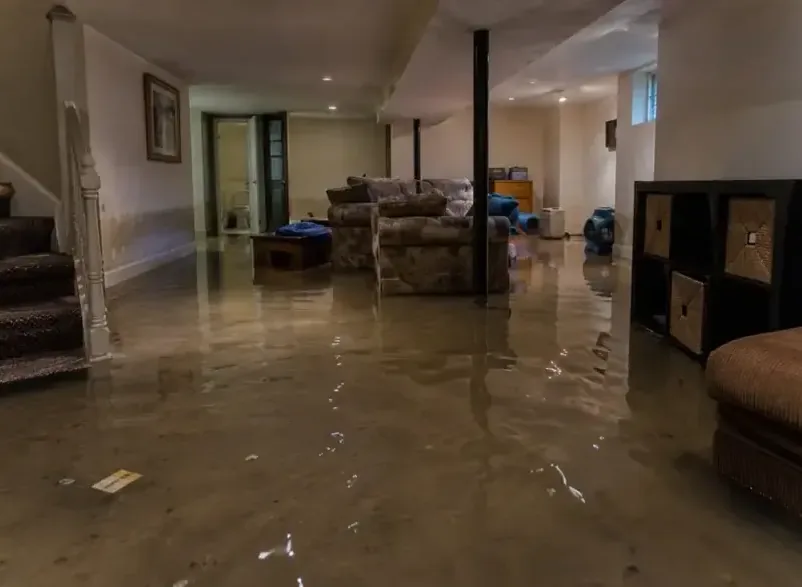
First steps for basement flooding cleanup
- 01Find the entry point Note whether water is coming up at the floor edge, a window well or the sump pit.
- 02Cut the power Switch off basement circuits at a dry panel before stepping into water.
- 03Raise what you can Lift boxes, electronics and furniture off the wet carpet.
- 04Check the sump pump Make sure it is running and the discharge pipe outside is clear.
Basement flooding is water from outside the house finding its way in: through the joint where the floor meets the foundation wall, through cracks in the slab, around pipes and up through window wells. On the Anoka Sand Plain the water table sits close to the surface, so a wet spring or a long rain pushes groundwater toward basements across the area. That water has crossed soil and concrete, so it is usually treated as Category 2.
What does basement flooding cleanup cost in Andover, MN?
Basement flooding cleanup in Andover, MN typically runs $2,500 to $12,000, depending on how much of the basement is finished, how high the water wicked and whether the water was clean, gray or contaminated.
Unfinished or partial
- Extraction on concrete
- Air movers and LGR
- Daily readings
Finished basement
- Pad out and flood cuts
- Baseboards removed
- Wall cavities dried
Whole level, long exposure
- Insulation removed
- Containment
- Extended monitoring
Ranges are typical, not a quote: the water category, square footage, material class and how fast drying started move the number most. The water damage cost calculator gives a closer range.
How basement flooding cleanup is handled, step by step
The tech who does the walkthrough maps moisture before any equipment goes down, and the equipment stays until the readings say dry.
Extract
Pumps and extractors remove water from the floor and the carpet.
Open up
Wet pad, baseboards and lower drywall come out.
Dry
LGR dehumidifiers and air movers work on the walls and the slab.
Verify
Daily readings until framing and concrete match a dry reference.
Where basement water comes in
- The cove joint where the floor slab meets the foundation wall
- Window wells that fill with rain and snowmelt
- Cracks in the slab or the poured walls
- Gaps around pipes and around the sump pit itself
When the pit is the source, see sump pump failure cleanup.
Finished basements and flood cuts
Most basements here are finished with carpet, pad, framed walls and drywall. Wet pad comes out. Drywall that wicked water is cut a foot or two above the wet mark so the framing and insulation behind it can dry, and baseboards come off so air reaches the bottom plate. Fiberglass batts that soaked in the wall cavity are removed.
Drying a cool basement
Basement air is cool and damp, which slows evaporation. LGR dehumidifiers are built for those conditions, and air movers are aimed at the opened walls and the concrete. Readings are taken daily until the framing and the slab match a dry reference. The National Weather Service flood safety pages and Ready.gov cover what to do while water is rising.
Basement flooding cleanup across the city and Anoka County
Coverage runs across ZIP 55304, from the Bunker Lake Boulevard and Hanson Boulevard corridors to the homes around Crooked Lake and Round Lake, the Coon Creek corridor, the Rum River side and the larger rural lots in the north of the city.
Nearby coverage reaches Ham Lake, Anoka, Coon Rapids, Blaine, Ramsey, Oak Grove, Spring Lake Park, East Bethel.
See every neighborhood and nearby city coveredRelated water damage services
Basement Flooding Cleanup questions in Andover, MN
Water still coming in?
Groundwater coming in? The restoration team dries basements 24/7.
(888) 432-4933 (888) 432-4933Talk through the basement waterWhy does water come up through the basement floor?
When the water table rises after snowmelt or heavy rain, groundwater pushes against the slab and walls and seeps in at the floor and wall joint or through cracks. Sandy soil lets it move quickly.
Is basement seepage clean water?
It is usually treated as Category 2 because it has passed through soil and concrete. Water that sat for days, or mixed with a floor drain backup, can be Category 3.
Does all the drywall have to come out?
No. The crew cuts above the wet mark, usually one to two feet, so the framing can dry. Drywall that stayed dry above that stays.
Can the carpet stay?
Sometimes, if the water was clean and extraction started quickly. The pad almost always comes out after groundwater.
Who fixes the cracks or the drain tile?
A waterproofing contractor handles drain tile, wall sealing and grading. The restoration team handles the water already inside: extraction, removal and drying.
Is basement flooding covered by insurance?
Groundwater seepage is often excluded or limited, and outside flood water usually needs flood insurance. Coverage depends on your policy, so check with your own insurer.
Basement flooding? Get the lower level dried.
Seepage keeps wicking into pad, framing and drywall. The drying team extracts it and dries the basement to readings.
(888) 432-4933Basement water help, any hour