Water Extraction and Removal in Andover, MN
Water left standing soaks deeper every hour. The extraction crew pulls it out of carpet, pad and basement concrete with truck-mounted and portable units, then starts the moisture log.
(888) 432-4933Get the standing water out now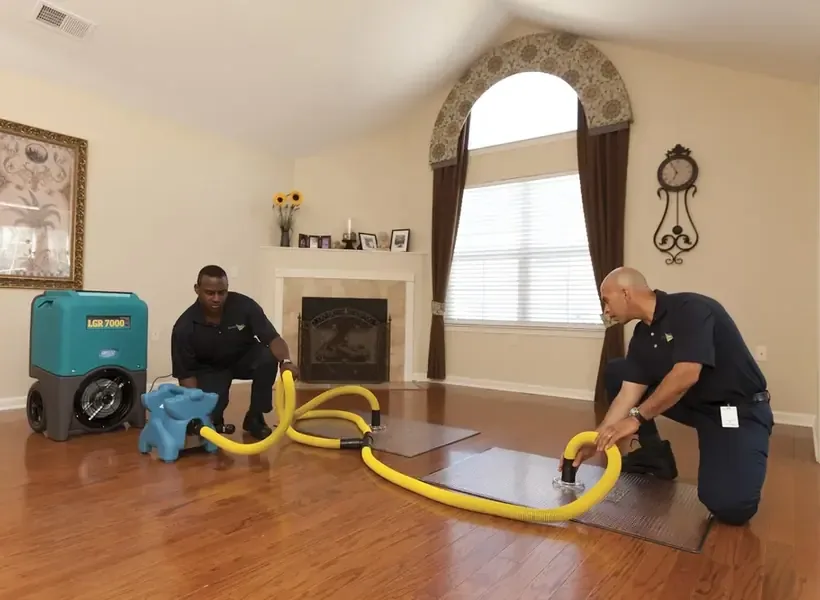
First steps for water extraction and removal
- 01Stop the water Close the main shutoff or unplug the failing appliance or pump.
- 02Cut the power Switch off breakers for wet rooms if the panel is dry and safe to reach.
- 03Lift belongings Move furniture, boxes and rugs off the wet carpet.
- 04Photograph it Record the water level and damaged items before anything moves.
Extraction is the first and cheapest part of a dry-out. Every gallon pulled out as liquid is a gallon the dehumidifiers do not have to pull out of the air later. In basement homes the water usually sits on concrete under carpet and pad, so the extraction crew works the floor until the wand stops pulling water, not until the surface looks dry.
What does water extraction and removal cost in Andover, MN?
Water extraction in Andover, MN typically runs $400 to $3,500 on its own, depending on how deep the water is, how many rooms it covers and whether carpet and pad are involved. Most jobs roll extraction into a full dry-out.
One room or part of a basement
- Standing water removed
- Carpet extracted
- Moisture map
Most of a finished basement
- Weighted pad extraction
- Baseboard check
- Wet pad hauled out
Deep water or two levels
- Submersible pumps
- Truck-mounted extraction
- Debris removed
Ranges are typical, not a quote: the water category, square footage, material class and how fast drying started move the number most. The water damage cost calculator gives a closer range.
How water extraction and removal is handled, step by step
The tech who does the walkthrough maps moisture before any equipment goes down, and the equipment stays until the readings say dry.
Assess
The tech checks the source, the water category and any electrical risk.
Pump
Submersible pumps take deep water down first.
Extract
Truck-mounted wands and weighted tools pull water out of carpet and pad.
Map
Meters mark where water moved, which sets the drying plan.
How the water gets pulled out
- Submersible pumps take down deep water in a basement or a window well first
- Truck-mounted extraction handles carpet and pad, with the waste tank outside the house
- Weighted or stand-on tools squeeze water out of the pad under the carpet
- Portable extractors reach upper floors, stairs and tight spots a hose cannot
Carpet, pad and concrete
Carpet over pad holds a surprising amount of water. When the water is clean and caught early, the crew extracts the carpet and floats it so the pad can dry in place. Gray or black water, or pad that stayed wet for days, means the pad comes out. Bare concrete is squeegeed and extracted, then dried with dehumidifiers because it keeps releasing moisture long after the surface looks dry.
What comes after extraction
Extraction ends with a moisture map. Meters and thermal imaging show where water slipped under baseboards and climbed drywall, and that map sets how many air movers and LGR dehumidifiers go into each room. The structural drying phase follows the IICRC S500 goal. The National Weather Service flood safety guidance and Ready.gov both cover electrical hazards around standing water.
Water extraction and removal across the city and Anoka County
Coverage runs across ZIP 55304, from the Bunker Lake Boulevard and Hanson Boulevard corridors to the homes around Crooked Lake and Round Lake, the Coon Creek corridor, the Rum River side and the larger rural lots in the north of the city.
Nearby coverage reaches Ham Lake, Anoka, Coon Rapids, Blaine, Ramsey, Oak Grove, Spring Lake Park, East Bethel.
See every neighborhood and nearby city coveredRelated water damage services
Water Extraction and Removal questions in Andover, MN
Water still coming in?
Water sitting on the basement floor? The extraction crew pulls it out 24/7.
(888) 432-4933 (888) 432-4933Start the water extractionHow fast does a truck-mounted unit clear a basement?
Truck-mounted extractors pull water much faster than portable units and send it to a tank outside, so a flooded basement is usually cleared in hours. Portable units handle upper floors and tight spots.
Can wet carpet be saved after extraction?
Often, if the water was clean and extraction started within a day or two. The pad usually goes. Carpet touched by sewage or outside flood water is removed.
Is extraction the same as drying?
No. Extraction removes liquid water. Drying removes the moisture left in framing, drywall, subfloor and concrete, with air movers and dehumidifiers over several days.
Why not just use a wet vac?
A wet vac helps with a small spill. A basement full of water needs pumps and extraction tools that pull water out of the pad, not just off the surface.
Is it safe to walk into a flooded basement?
Not if the water could reach outlets, cords or the furnace. Switch off power at a dry panel first, or wait for the crew.
Does insurance pay for water extraction?
Extraction after a sudden, accidental leak is usually part of a covered claim, while groundwater and backups depend on the policy. Coverage depends on your policy, so check with your own insurer.
Standing water downstairs? Get it extracted today.
Water left on carpet and concrete keeps wicking into drywall. The extraction crew pumps it out and starts the moisture map.
(888) 432-4933Call the extraction crew, 24/7