Basement Flooding Cleanup in Anoka, MN
A basement in Anoka that has taken on water needs the standing depth pumped out, wet carpet and drywall cut away, and the concrete, framing and walls dried until meters confirm it.
(888) 432-4933Get the basement pumped out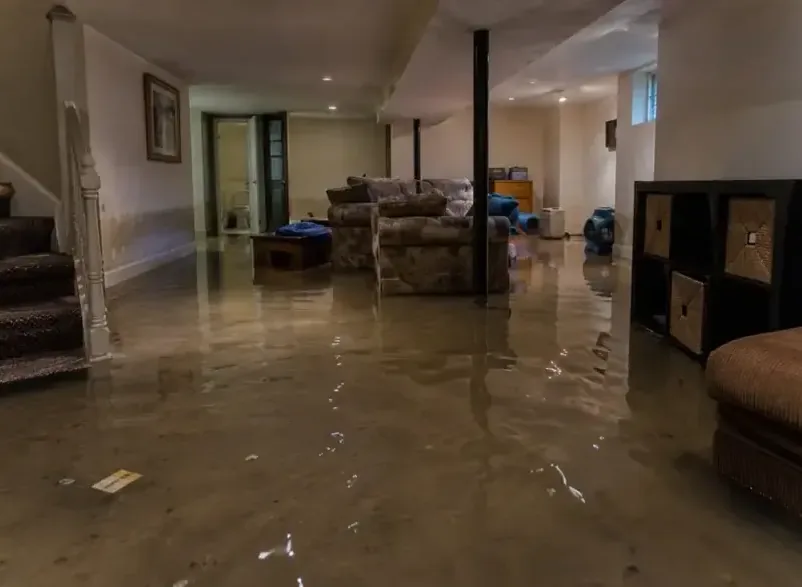
First steps for basement flooding cleanup
- 01Stop more water Close the main valve for a pipe leak, and keep a working sump pump running.
- 02Respect the power Stay out of water touching outlets or the panel until the breaker is off.
- 03Lift valuables up Move boxes, rugs and light furniture onto dry ground, heavy pieces onto blocks.
- 04Photograph the depth Photograph the water level against stairs or walls and each damaged item before discarding it.
Basement water rarely stays put. It wicks into drywall, spreads under carpet and soaks wall bottoms, so the cleanup works outward from the standing depth. Water can reach a lower level from several directions, from river backwater to sump failures to sewer overloads in large rain events.
What does basement flooding cleanup cost in Anoka, MN?
Basement jobs scale with how much of the level is wet and how long it sat. Unfinished space on concrete costs the least, while finished rooms with drywall, insulation and carpet cost more because more material comes out.
Unfinished or partial level
- Concrete floor extracted
- Air movers and LGR units
- Readings each day
Finished basement
- Pad and low drywall removed
- Baseboards pulled
- Wall cavities dried
Whole level, long exposure
- Insulation taken out
- Containment set
- Extended monitoring
Ranges are typical, not a quote: the water category, square footage, material class and how fast drying started move the number most. The water damage cost calculator gives a closer range.
How basement flooding cleanup is handled, step by step
The tech who does the walkthrough maps moisture before any equipment goes down, and the equipment stays until the readings say dry.
Pump out
Pumps drop the depth and wands clear the slab.
Tear out
Wet pad, carpet, low drywall and soaked insulation are cut out.
Clean and treat
Exposed surfaces are cleaned and an antimicrobial is applied.
Dry and log
Dehumidifiers and air movers run while daily readings track drying.
What comes out and what stays
- Wet carpet pad, always removed
- Drywall cut above the wicking height of the water
- Baseboards pulled so wall cavities can dry
- Insulation that absorbed water in finished walls
Concrete, studs and plates usually stay and are dried in place, with hardwood and laminate judged one board at a time.
Pad goes first because it holds the most water and cannot be dried reliably. Photos of each cut and each removed layer go into the claim record.
Old flood stories and the basement today
A local historian notes that before expected floods in the flats, the city once pumped water into some basements to equalize pressure. That was history, not current practice. A wet basement today is pumped out, stripped and dried.
Drying a finished lower level
After pumping and tear-out, dehumidifiers and air movers dry the slab and framing while meters track progress. Structural drying continues until readings match dry reference points, and the daily log feeds the insurance file.
Antimicrobial treatment goes on once the surfaces are exposed and cleaned.
Basement flooding cleanup across Anoka and nearby communities
Basement work covers homes across the city, from older houses around Christian Hill and downtown to townhomes at RiversPointe and houses near Goodrich Field, plus the rest of the service area along Highway 10 and Highway 169.
The same service nearby: basement flooding cleanup in Andover, Blaine, Oak Grove.
Every town coveredRelated water damage services in Anoka
Basement Flooding Cleanup questions in Anoka, MN
Water still coming in?
Basement taking on water? Pumping and tear-out can begin while the claim details come together.
(888) 432-4933 (888) 432-4933Get the pumps goingShould the basement be pumped all at once?
When groundwater is high outside, the level is lowered in stages so the walls and slab are not stressed. Water from a pipe leak can be pumped straight down.
Is a finished basement worth saving?
Often yes. Concrete, framing and most subfloors dry in place, while wet pad, carpet and insulation are replaced. The moisture readings show which drywall must go.
Why do basements flood when it has not rained hard?
A failed sump pump, a power outage, a burst pipe or a backed up floor drain can flood a basement on a dry day, so the cause matters as much as the cleanup.
Can wet belongings in the basement be saved?
Hard items like tools, plastic bins and metal shelving can be cleaned and dried. Paper, cardboard, upholstery and anything touched by sewage are usually discarded.
How long until a flooded basement is dry?
Most basements need several days of dehumidifiers and air movers, and meters decide the finish. Hardwood, concrete and wall cavities can take longer than carpet.
Does insurance cover basement flooding?
Sudden pipe, tank and appliance leaks are often covered. Water that seeps in from the ground or backs up through a drain usually needs added coverage, and river flooding needs a flood policy.
Get the basement drained and dry
Pumping, tear-out, treatment and dehumidified drying are planned in one visit, with readings and photos saved for the insurance file.
(888) 432-4933Call about basement water