Structural Drying and Dehumidification in Oak Grove, MN
Water that has left the surface sits in framing, subfloor and drywall until the air is controlled. The drying team sets equipment from a moisture map and checks readings every day until the structure is dry.
(888) 432-4933Call about drying equipment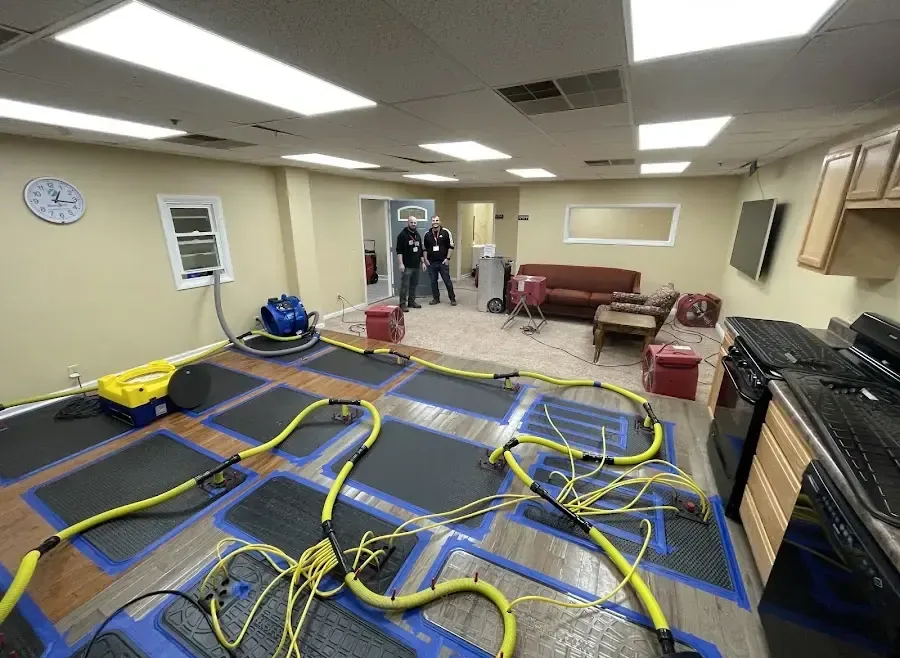
First steps for structural drying and dehumidification
- 01Keep the home warm A warm house dries faster, so keep the heat running.
- 02Leave equipment running Do not switch off air movers or dehumidifiers overnight.
- 03Keep the space closed Keep doors and windows shut in the drying area.
- 04Do not move equipment Leave air movers where they are placed, since each aims at a mapped wet spot.
Removing standing water is only half of a water loss. Moisture left in subfloor, studs and drywall keeps feeding damage, which is why drying is planned like a project: map the wet area, place equipment by the class of water, and measure until the numbers say dry. No two houses dry on the same schedule. A dry surface alone does not count.
What does structural drying and dehumidification cost in Oak Grove, MN?
Structural drying typically runs $1,000 to $8,000 or more. A single room with light wetting is the low end, and several rooms, wall cavities, hardwood or concrete push toward the top, because they need more equipment and more days.
One room, Class 1 to 2
- Moisture map
- Air movers and LGR
- Daily logs
Several rooms or a basement
- Containment
- Multiple dehumidifiers
- Wall cavity drying
Class 4, hardwood or concrete
- Desiccant drying
- Drying mats
- Extended monitoring
Ranges are typical, not a quote: the water category, square footage, material class and how fast drying started move the number most. The water damage cost calculator gives a closer range.
How structural drying and dehumidification is handled, step by step
The tech who does the walkthrough maps moisture before any equipment goes down, and the equipment stays until the readings say dry.
Map
Meters and a thermal camera mark the wet materials.
Place
Air movers and dehumidifiers go in by water class.
Monitor
Readings are taken and equipment adjusted each day.
Release
Equipment is removed once every material is dry.
How the equipment works together
- Air movers push dry air across wet surfaces
- LGR dehumidifiers pull moisture out of the air
- Drying mats lift water from hardwood and floors
- Desiccant units handle cold or very wet spaces
Cold weather matters here, because refrigerant dehumidifiers lose capacity in chilly basements and desiccant drying can take over. Extraction comes first, as described under water extraction, and shops follow the same plan under commercial water damage.
Classes of water loss
Class 1 and 2 losses involve limited or moderate wetting, while Class 3 and 4 involve soaked ceilings, walls or deep materials such as hardwood and concrete. The class sets how many air movers and dehumidifiers go in, and Class 4 jobs usually need specialty drying.
Readings, not guesses
Moisture meters, a thermal camera and a psychrometer track the wet materials and the air each day. Equipment is adjusted or removed as areas finish, and the drying team signs off only when every reading reaches the dry goal. Drywall and framing that pass the readings are left in place, which keeps tear-out and rebuilding smaller. A drying time estimator gives a rough idea before the first readings.
Structural drying and dehumidification across Oak Grove and nearby communities
Structural drying crews set up in homes and shops across the city, from The Ponds and Lake George to Collins Corner, Aspen Glenn, Sims Trail Crossing and the County Road 9 and County Road 78 corridors.
The same service nearby: structural drying and dehumidification in Andover, Ham Lake, Anoka.
Every town coveredRelated water damage services in Oak Grove
Structural Drying and Dehumidification questions in Oak Grove, MN
Water still coming in?
Water out but walls still damp? Describe what was wet and when.
(888) 432-4933 (888) 432-4933Oak Grove drying helpHow long does structural drying take?
Most jobs run several days. Light wetting on a single room can finish sooner, while hardwood, concrete and wet wall cavities take longer. Meters decide, not the calendar.
Why is the equipment so loud?
Air movers need airflow across wet surfaces and dehumidifiers run fans and compressors. The noise means moisture is leaving, and units are removed as soon as rooms read dry.
Can wet drywall and insulation be saved?
Drywall that is clean, intact and only damp can often dry in place. Insulation, sagging board and soaked or contaminated material usually come out.
Does drying raise the electric bill?
Yes, a few days of air movers and dehumidifiers adds to power use. The drying log lists the equipment and days so the insurer can account for it.
How do you know the structure is dry?
Readings from wet areas are compared with an unaffected area of the same material, and drying is complete when they match the dry goal. Surface feel alone is not enough.
Is structural drying part of every water job?
Almost always. Any loss that wet more than the surface needs it, since extraction alone leaves moisture in materials that keep it for weeks.
Dry every layer, not just the surface
The drying team maps the moisture, sets equipment by water class and logs readings every day until each material reaches its dry goal.
(888) 432-4933Start a drying plan