Structural Drying and Dehumidification in Ham Lake, MN
Summers average 79.9 degrees and winters 29.5, and low ground holds a high water table, so framing and subfloors dry slowly without help. The drying team runs equipment against meter readings until wood is dry.
(888) 432-4933Book structural drying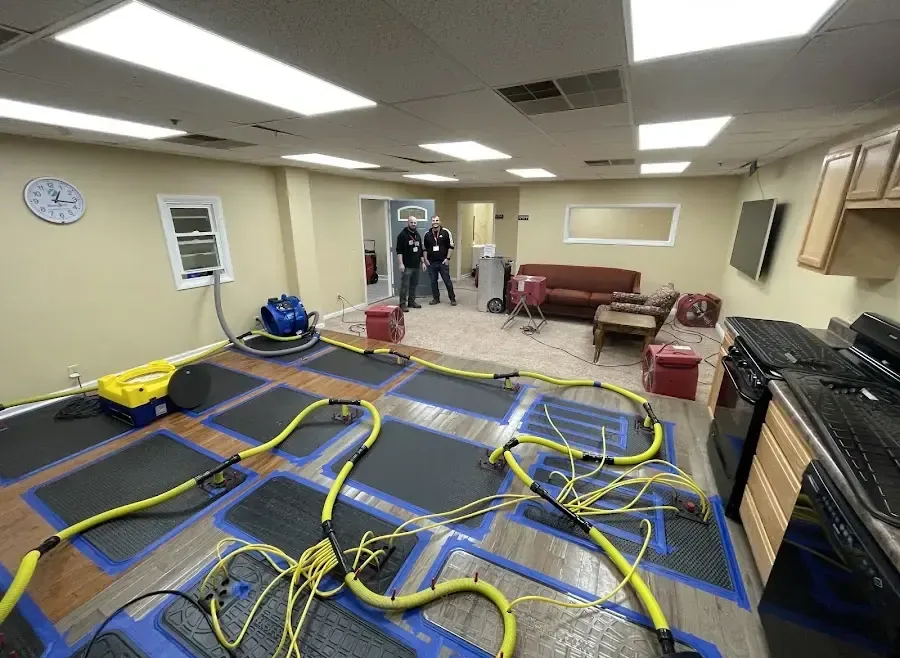
First steps for structural drying and dehumidification
- 01Keep equipment running Leave air movers and dehumidifiers on, and do not switch them off between visits.
- 02Close doors and windows Closed rooms let dehumidifiers work on wet indoor air instead of outdoor air.
- 03Keep heat steady A steady indoor temperature helps water leave the materials, especially in winter.
- 04Protect dry belongings Keep furniture and boxes out of the drying zone and off wet floors.
Drying a building is controlled evaporation. Air movers lift water from surfaces, dehumidifiers pull it from the air, and heat or mats help when materials hold water deep inside. In Ham Lake the swing between a summer average of 79.9 degrees and a winter average of 29.5 changes how fast a house dries, so the plan follows readings rather than a calendar.
What does structural drying and dehumidification cost in Ham Lake, MN?
Structural drying cost is set by the number of rooms, the type of materials and the drying class. A small Class 1 or 2 job is the low end, and concrete, hardwood or Class 4 work runs highest.
One room, light wetting
- Moisture map made
- LGR dehumidifier
- Daily logs kept
Several rooms or basement
- Containment used
- Wall cavities dried
- Multiple dehumidifiers
Hardwood or concrete
- Desiccant units
- Drying mats
- Extended monitoring
Ranges are typical, not a quote: the water category, square footage, material class and how fast drying started move the number most. The water damage cost calculator gives a closer range.
How structural drying and dehumidification is handled, step by step
The tech who does the walkthrough maps moisture before any equipment goes down, and the equipment stays until the readings say dry.
Map
Meters and a thermal camera mark every wet surface.
Set up
Air movers and dehumidifiers go against the wet zones.
Monitor
Temperature, humidity and moisture are logged daily.
Confirm
Equipment is pulled once readings meet the dry goal.
What gets dried
- Wall cavities and the bottoms of studs
- Subfloors and floor framing under flooring
- Concrete slabs after a basement flood
- Hardwood and engineered floors that have started to cup
The median home here was built in 1994, so wood framing, sheathing and drywall are the usual materials to dry. Concrete and hardwood take longest, since both hold water far longer than drywall does.
How drying is measured
A moisture map comes first, with readings on every wet surface. Temperature and humidity are logged each day, along with readings from framing and subfloor, and equipment moves as the dry zone grows. Drying is complete when readings match the dry goal, not when equipment has run for a set number of days.
When drying is the whole job
Some losses need no demolition, only well-run equipment. Many others start with pumping, which is covered under water extraction, and the schedule can be estimated with the drying time estimator.
Structural drying and dehumidification across Ham Lake and nearby communities
Drying work covers all of Ham Lake, from Hidden Forest East and West, Deer Haven Hills and Radisson Meadows to Soderville, plus businesses in Ham Lake Industrial Park, Landborg Industrial Park and along Highway 65.
The same service nearby: structural drying and dehumidification in Andover, Blaine, Oak Grove.
Every town coveredRelated water damage services in Ham Lake
Structural Drying and Dehumidification questions in Ham Lake, MN
Water still coming in?
Walls or floors still damp after the water is gone? The drying team books with one call.
(888) 432-4933 (888) 432-4933Book the drying teamHow long does structural drying take?
Most jobs run three to five days, though thick materials such as hardwood and concrete take longer. Readings show the real finish date.
Why do dehumidifiers matter as much as fans?
Fans move wet air, but dehumidifiers remove the water from it. Without them the moisture settles back into walls and floors.
Is it normal for equipment to run loud and hot?
Yes. Dehumidifiers add heat and air movers add noise, which comes with fast drying. The rooms feel warm because doors and windows stay closed.
Can high summer humidity slow drying?
It can, since the air already holds moisture. Dehumidifiers create dry air inside the house, so outdoor humidity matters less.
How is dry confirmed?
Readings on each wet material are compared with readings from similar dry areas of the same house. When they match, the equipment leaves and the file is closed.
Will drying raise the electric bill?
Modestly. Equipment draws power for several days, and the added use can be noted in an insurance claim.
Damp framing does not dry by itself
Wet studs and subfloors hold moisture for weeks without equipment. The drying team maps the water, runs dehumidifiers and logs readings until every material is dry.
(888) 432-4933Ham Lake structural drying help