Water Extraction and Removal in Ham Lake, MN
Sandy ground drains quickly, but low areas hold a high water table, so standing water in a Ham Lake basement or garage is pumped out fast, before it soaks framing and flooring.
(888) 432-4933Book water removal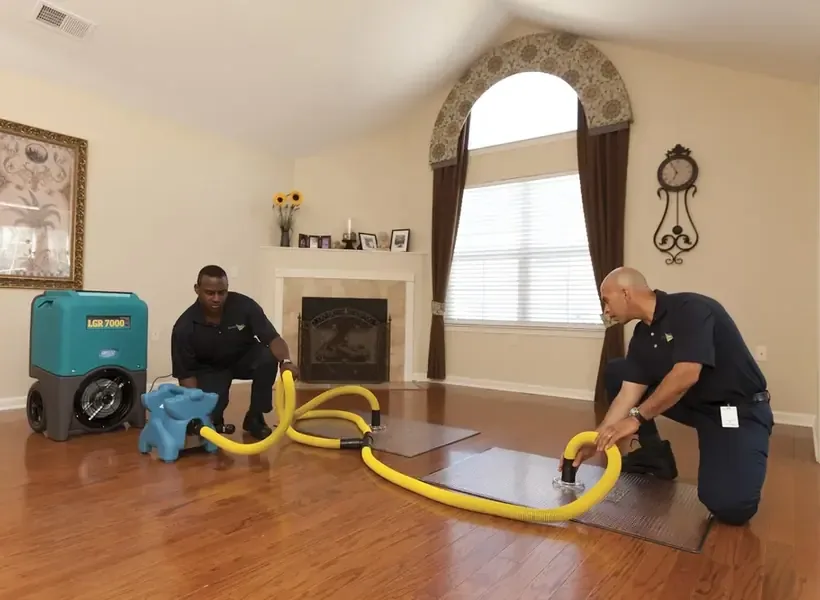
First steps for water extraction and removal
- 01Stop the source Close the supply valve or the well pump breaker if a pipe failed.
- 02Avoid deep water Water near outlets or a panel can be live, so keep out until power is off.
- 03Lift what can move Raise furniture, rugs and boxes onto dry surfaces.
- 04Photograph the water Photograph the water line and damaged items before moving anything.
Water that sits on a floor does not stay there. In a Ham Lake home it moves into carpet pad, baseboards and the bottoms of wall cavities, and every hour of waiting adds material that has to be torn out. The extraction crew removes the water first, then maps where it traveled.
What does water extraction and removal cost in Ham Lake, MN?
Extraction is usually the smallest part of a water loss. Cost follows how deep the water is, how much floor it covers and whether pad must come out, and the three cards below show the usual ranges.
One room, shallow water
- Wet vacuum pass
- Carpet pressed dry
- Readings logged
Most of a finished basement
- Pad extracted
- Baseboards checked
- Wet pad hauled
Deep water or two levels
- Submersible pumps
- Truck mount runs
- Debris cleared
Ranges are typical, not a quote: the water category, square footage, material class and how fast drying started move the number most. The water damage cost calculator gives a closer range.
How water extraction and removal is handled, step by step
The tech who does the walkthrough maps moisture before any equipment goes down, and the equipment stays until the readings say dry.
Pump the depth
Submersible pumps lower the water until a truck mount reaches the floor.
Extract the surface
Wands and weighted tools pull water from carpet, pad and floors.
Remove what failed
Saturated pad and ruined baseboard are cut out and hauled away.
Map and set drying
Readings decide where drying equipment goes.
Where standing water comes from
- Spring snowmelt and blocked street drainage backing into a garage or lower level
- A summer storm that overwhelms low ground near a ditch or wetland edge
- A failed sump pump, or a power outage during an ice storm
- A split supply hose, water heater or washer on a finished floor
Each source leaves a different category of water, and that category decides what can be dried in place and what must go.
What the extraction crew does
Submersible pumps take down deep water. A truck-mounted unit then pulls what remains out of carpet, pad and hard floors, and weighted tools press water from cushion that would otherwise hold it for days. Pad that cannot be saved is cut out and hauled away, since it dries slowly and feeds odor.
After the water is out
Standing water is only part of the load. A moisture meter and thermal camera show how far it reached, and those readings decide where air movers and dehumidifiers go. The next stage is structural drying, tracked with the drying time estimator.
Water extraction and removal across Ham Lake and nearby communities
Extraction work runs across Ham Lake, from homes in Soderville and the Lake Netta area to Hidden Forest East and West, Radisson Meadows and the commercial parks along Highway 65. Basements, garages and shops are pumped the same way.
The same service nearby: water extraction and removal in Andover, Blaine, Oak Grove.
Every town coveredRelated water damage services in Ham Lake
Water Extraction and Removal questions in Ham Lake, MN
Water still coming in?
Water still standing on a basement or garage floor? Pumping starts with a booking for the extraction crew.
(888) 432-4933 (888) 432-4933Book pumping helpHow fast does standing water need to come out?
As soon as it can be done safely. Water wicks into pad, drywall and framing within hours, and the 24 to 48 hour window before mold can start is why pumping comes first.
Can the carpet be saved after extraction?
Often yes when the water was clean and caught early, because carpet is extracted and dried in place. Pad is the usual loss, since it holds water and costs less to replace than to dry.
Does a sandy lot keep basements dry?
Sand drains quickly, but low areas here can have a water table at or near the surface. Water that keeps seeping in has to be pumped continuously until the source slows.
What equipment pulls water from a flooded floor?
Submersible pumps move deep water, while wet vacuums and truck-mounted wands handle the surface. Weighted extractors press water from carpet and pad, and the mix depends on depth and flooring.
Is extraction different for gray or black water?
Yes. Storm and sump water carries soil and bacteria, so porous materials are handled with more care and often discarded. Sewage is a separate job, covered under sewage backup cleanup.
Does extraction alone stop the damage?
No. Pulling standing water leaves damp materials behind. Drying equipment and daily readings finish the job, so extraction is normally followed by structural drying.
Standing water keeps spreading
Every extra hour lets water travel further into carpet, pad and wall bottoms. The extraction crew works room by room until the surface is dry and the readings are logged.
(888) 432-4933Ham Lake water removal help