Water Extraction and Removal in Spring Lake Park, MN
Pumps, wands and weighted extractors lift standing water out of carpet, pad and hard floors, so the damage stops moving into the walls and drying can start.
(888) 432-4933Call about standing water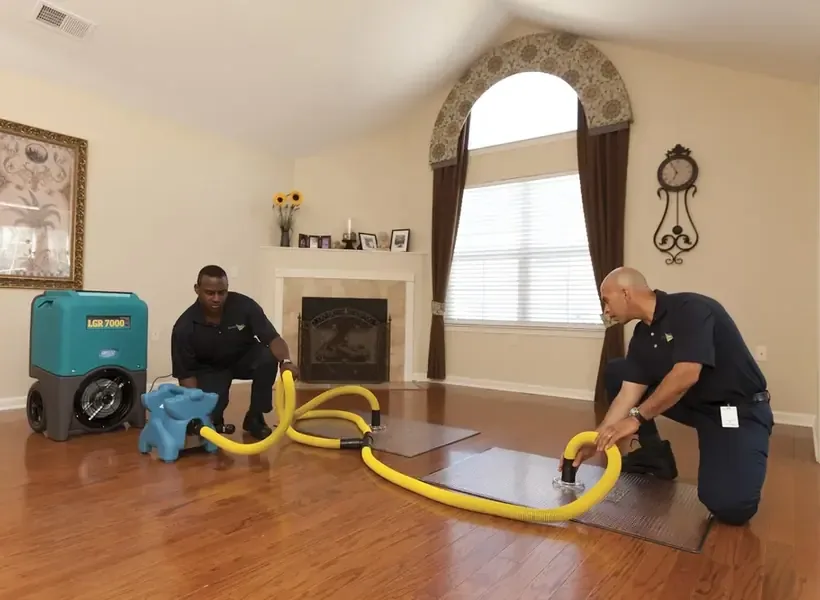
First steps for water extraction and removal
- 01Stop the source Shut the valve or switch off the appliance feeding the water.
- 02Watch the outlets Stay clear of cords near standing water and shut breakers off only at a dry panel.
- 03Lift what you can Raise furniture and boxes onto blocks or foil so they stop wicking water.
- 04Photograph first Take photos of the waterline and belongings before extraction begins.
Extraction is the first job on almost every wet loss, because water left in place keeps climbing into baseboards, subfloor edges and wall cavities. In Spring Lake Park the sandy Anoka Sandplain soil usually lets surface water soak in, but low spots and the wetlands east of Highway 65, near Laddie Lake and Spring Lake, can hold standing water, so the extraction crew pulls it out quickly.
What does water extraction and removal cost in Spring Lake Park, MN?
Extraction alone usually runs $400 to $3,500, set by how deep the water is, how much carpet and pad it reached and whether portable pumps or truck mounted equipment are needed, with deeper losses at the top of that range.
One room or one corner
- Standing water out
- Carpet extracted
- Moisture map made
Most of a finished lower level
- Weighted pad extraction
- Baseboard check
- Wet pad hauled
Deep water or two levels
- Submersible pumps
- Truck mounted extraction
- Debris removed
Ranges are typical, not a quote: the water category, square footage, material class and how fast drying started move the number most. The water damage cost calculator gives a closer range.
How water extraction and removal is handled, step by step
The tech who does the walkthrough maps moisture before any equipment goes down, and the equipment stays until the readings say dry.
Measure the water
Depth and spread set the pump plan.
Pump and extract
Standing water goes first, then carpet and pad.
Clear wet debris
Saturated pad is hauled out before it soaks the subfloor.
Map what remains
Meters show which materials still need drying.
What gets pulled out first
- Standing water on concrete and tile floors, cleared with pumps and squeegee tools
- Water trapped in carpet and pad, drawn up with weighted extraction tools
- Water sitting on hardwood, where fast removal limits cupping and staining
- Water pooled in a window well or low corner before it wicks into the wall base
When pad is too saturated to save, the crew lifts and hauls it out, then extracts the carpet and keeps it if it can dry.
Why speed matters
Clean water turns gray as it sits in porous material, and wet drywall and framing can start growing mold within 24 to 48 hours. Pulling the bulk of the water first cuts the drying load, which shortens equipment time and reduces how many materials have to come out.
Handing off to drying
Once the surface water is gone, the response team maps moisture with meters and a thermal camera, then sets air movers and dehumidifiers. Wet framing and subfloors move straight into structural drying, and deeper losses are covered under basement flooding cleanup.
Water extraction and removal across Spring Lake Park and nearby communities
Extraction work runs across the city's residential streets and apartment buildings, from the low ground near Laddie Lake and Spring Lake to the shops along University Avenue and Central Avenue, with portable pumps for tight spaces.
The same service nearby: water extraction and removal in Andover, Blaine, Ham Lake.
Every town coveredRelated water damage services in Spring Lake Park
Water Extraction and Removal questions in Spring Lake Park, MN
Water still coming in?
Water that stands soaks deeper into pad and subfloor, so removal comes before everything else.
(888) 432-4933 (888) 432-4933Describe the standing waterHow long does extraction take?
That depends on depth and floor area. One room moves quickly, while deep water across a whole level takes a longer pass with several pumps. Drying then continues for days.
Can wet carpet be saved afterward?
Often yes for clean water, if the pad comes out and the carpet is dried quickly. Gray or sewage water usually ends the carpet's life, because porous material cannot be reliably sanitized.
Is a shop vacuum enough?
A shop vacuum handles a small spill, but it cannot pull water from pad or subfloor edges, and it should never be plugged in while standing in water. Larger spills need pumps and weighted tools.
Does extraction also dry the structure?
No. Extraction removes the bulk water, while air movers and dehumidifiers remove the moisture left in framing and flooring. Both stages are needed before the loss is finished.
What if the water is sewage?
Sewage is category 3 and is handled with containment and protective gear. Those losses move to sewage backup cleanup instead of a standard extraction.
Will insurance pay for extraction?
Coverage depends on the cause. Sudden events such as a pipe burst are commonly covered, and the extraction crew records the waterline, equipment and readings for the claim.
Get the water out before it travels
The extraction crew sizes pumps to the depth of the water, clears every wet surface and hands off to drying with a full moisture map.
(888) 432-4933Request pumping help