Structural Drying and Dehumidification in Spring Lake Park, MN
Wet framing, subfloors and wall cavities dry on a plan: moisture mapping, air movers and dehumidifiers sized to the room, and daily readings until every material reaches its goal.
(888) 432-4933Call about drying equipment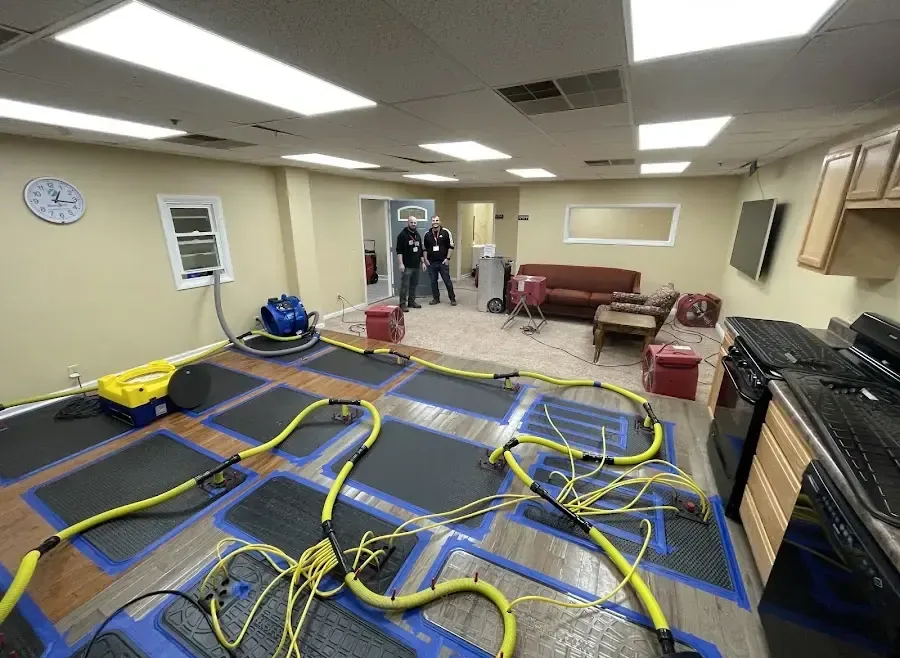
First steps for structural drying and dehumidification
- 01Open the space Clear furniture so air can reach floors and wall bases.
- 02Keep doors open Leave cabinets and closets open so moist air can escape.
- 03Leave the equipment on Dehumidifiers and air movers need to run without a break.
- 04Keep a log Note the date equipment started and any change in the room.
Drying is a measured process, not a matter of leaving fans on. The drying team maps wet materials, picks equipment for the water class and the material, and watches the readings each day. Parts of the city sit near wetlands and lakes, which is one reason the crew takes reference readings in an unaffected area before setting a dry goal.
What does structural drying and dehumidification cost in Spring Lake Park, MN?
Structural drying usually costs $1,000 to $8,000, depending on how many rooms are wet, what the materials are and whether hardwood, concrete or wall cavities push the job into longer equipment time.
One room, Class 1 to 2
- Moisture map
- Air movers and LGR
- Daily logs
Several rooms or a basement
- Containment
- Multiple dehumidifiers
- Wall cavity drying
Class 4, hardwood or concrete
- Desiccant drying
- Drying mats
- Extended monitoring
Ranges are typical, not a quote: the water category, square footage, material class and how fast drying started move the number most. The water damage cost calculator gives a closer range.
How structural drying and dehumidification is handled, step by step
The tech who does the walkthrough maps moisture before any equipment goes down, and the equipment stays until the readings say dry.
Map
Meters and a camera show the wet materials.
Set up
Air movers and dehumidifiers are placed by class.
Monitor
Readings are taken and equipment is adjusted daily.
Confirm
Dry goals are met before equipment leaves.
How the equipment is chosen
- Air movers for wet floors, wall bases and open cavities
- LGR dehumidifiers for typical wet rooms and most basements
- Desiccant dehumidifiers for dense or cold materials
- Drying mats and panels for hardwood and subfloors
Equipment is sized by room volume and class of loss, not by guess. Placement matters as much as count, since air movers aimed along wall bases and into cavities move moisture faster than machines parked in the middle of a room.
What daily monitoring involves
Each visit records temperature, relative humidity and moisture content for wet materials. Air movers get repositioned, dehumidifiers get checked and anything that stopped drying is looked at again. The log shows an adjuster the trend, not just the final number.
Knowing when it is done
Drying ends when each material reaches its dry goal, not after a set number of days. Concrete and hardwood take longest, and Class 4 losses may need desiccant. The drying time estimator gives a first estimate, and water extraction comes before any of it.
Structural drying and dehumidification across Spring Lake Park and nearby communities
Structural drying covers wet floors, walls and ceilings across the city, from rambler homes and rental buildings to shops and offices along University Avenue and Highway 65, including lower levels near the wetlands between Laddie Lake and Spring Lake.
The same service nearby: structural drying and dehumidification in Andover, Blaine, Ham Lake.
Every town coveredRelated water damage services in Spring Lake Park
Structural Drying and Dehumidification questions in Spring Lake Park, MN
Water still coming in?
Materials that stay wet after the water is gone keep damaging the structure, so drying starts while readings are high.
(888) 432-4933 (888) 432-4933Spring Lake Park drying equipment helpHow long do dehumidifiers need to run?
Most jobs run about three to five days, though hardwood, concrete and wall cavities can take longer. Readings decide, not the calendar.
Why so much equipment?
Air movers evaporate moisture from surfaces, and dehumidifiers remove it from the air so it does not settle elsewhere. Large or dense areas need more of both.
Can I turn the machines off at night?
Not without hurting the result. Stopping lets moisture rebound, so equipment runs until the readings reach the dry goal.
What does Class 4 drying mean?
Class 4 describes dense, low permeability materials such as hardwood, plaster and concrete that hold water deeply. They need specialty equipment like desiccant dehumidifiers and drying mats.
Is mold a risk if drying is slow?
Wet drywall and framing can start growing mold within 24 to 48 hours, which is why equipment is set early and the readings are tracked.
Does insurance cover drying?
Mitigation is commonly covered when the water damage itself is covered. The carrier decides, and the daily logs show why each machine ran.
Dry the structure to a measured goal
The drying team maps moisture, sets equipment by class and logs every visit until each material meets its dry goal.
(888) 432-4933Plan the drying in Spring Lake Park