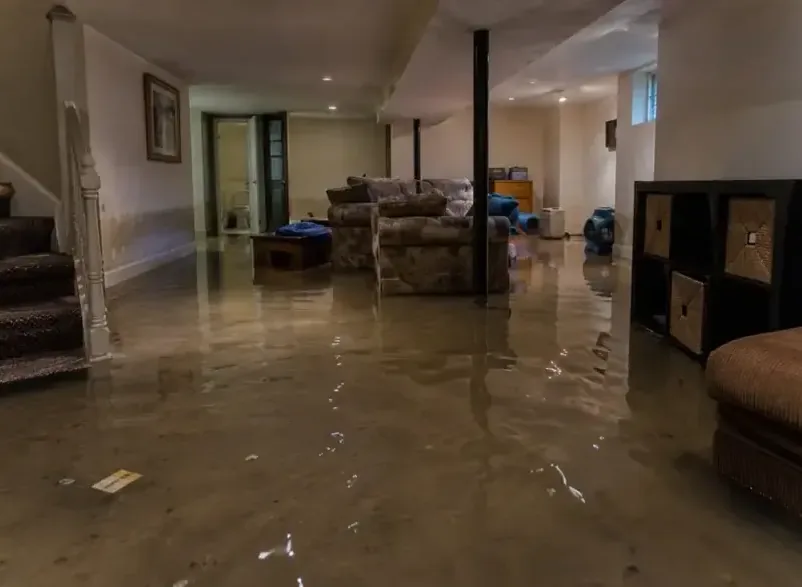
Anoka sits where the Rum River meets the Mississippi River, and water has shaped the city for generations. A local historian describes one low stretch of town, the flats, as a place where basement flooding was once a regular event.
Key takeaways
- A local historian says the flats south of downtown flooded from Mississippi River backwater about every 10 years.
- The same historian ties the record high water of 1965 to seven demolished houses and the creation of the city Housing and Redevelopment Authority.
- In 2001, the account says, the flats were raised eight feet with fill, and the new townhome neighborhood is called RiversPointe.
- Water outside a basement wall pushes on it, which is why a flooded basement is pumped out in stages.
- The county plan counts 110 potential buildings damaged in the Anoka floodplain, so a plan for river-side basements still matters.
The flats: low ground that flooded before the fill
According to a local historian, the flats were low ground just south of downtown near the Rum River. Mississippi River backwater, caused by periodic ice jams, flooded the area about every 10 years.
The 1965 flood and what followed
The record high water of 1965 damaged several houses in the flats and led to the demolition of seven, in the historian's telling. That loss led to the creation of the city Housing and Redevelopment Authority.
The local historian's account treats that flood as the turning point.
Eight feet of fill in 2001
In 2001 the flats area was raised eight feet with fill to end the flooding, the historian says. The new townhome neighborhood on that ground is called RiversPointe.
Why the city once pumped water into basements
A local historian notes that before expected floods in the flats, the city would pump water into some basements to equalize pressure and prevent damage. That is history, not a current practice.
It shows a basic fact about water: the force on a basement wall depends on the water outside as well as the water inside.
- Saturated soil around a basement pushes inward and upward on the wall and slab.
- Emptying a basement too fast while the ground is still full can stress the wall.
- The safer approach is to lower the water gradually as the outside level falls.
What the history means for a flooded basement today
The city told county planners that the Rum River and the Mississippi River each carry independent flood risk. A handful of private properties and public utilities are affected by localized flooding.
The Anoka County 2025 Hazard Mitigation Plan counts 110 potential buildings damaged in the Anoka floodplain, and the current FEMA flood map is dated December 16, 2015.
- The Coon Rapids Dam may cause ice jams during winter and early spring along the river at Anoka.
- The city owns the Rum River Dam, and its flashboards are removed in winter to lower the pool and reduce the effects of ice-out and spring flooding.
- Large rain events can also overload the sanitary sewer, which is a separate kind of basement water.
Where the maps stand
FEMA is the authority for flood maps. A homeowner can look up a property on the FEMA Flood Map Service Center instead of guessing from the old stories.
A map shows flood risk from rivers, but it does not show every way water can reach a basement.
How a flooded basement is pumped out in stages
The first question is where the water in the basement came from and how high the water is outside. The answer sets the pace.
Check the water outside first
If the yard is still under water or the ground is soaked, the crew lowers the basement water a little at a time. Rushing the pump-out can move the problem from the floor to the wall.
Pump, pause and check
After each stage, the crew checks the walls and floor and waits for the outside level to settle. Water extraction in a river-side basement is a patient job.
Drying after the water is gone
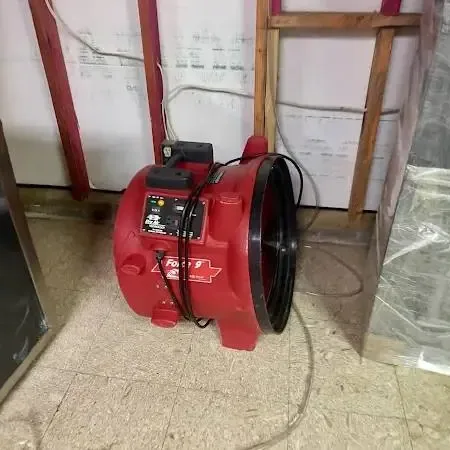
Once the standing water is out, the structure still holds moisture. Concrete, framing and drywall dry slowly, and the crew works from readings, not appearances.
A basement that looks dry to the eye can still read wet at the base of the walls, so the final check is done with a meter.
- Wet carpet pad and soaked insulation are removed.
- Drywall that stayed wet is cut back above the waterline.
- Air movers and dehumidifiers run until readings match dry reference points.
- A basement flooding cleanup ends with a final moisture check before rebuilding.
First steps for a basement with rising water
River-side basements need a calm first move. Rising water and electricity do not mix.
The list below keeps the first steps simple and keeps everyone out of danger.
- Stay out if water is near outlets, the panel or the furnace.
- Have the power shut off to the area from a dry location, or ask for help to do it.
- Move valuables and photographs upstairs, and take pictures of how high the water reached.
- Do not start a pump-out without knowing how high the water is outside.
- Call a team that can plan the pump-out in stages, and read about storm and snowmelt flood cleanup if the water came from outside.
Preparing a river-side basement before the water comes
The flats history is a reminder that a basement near the rivers needs a plan before the water rises. A few habits make the first day far easier.
The water damage restoration team in Anoka can walk through the options for a particular property.
- Keep valuables, records and photographs on shelves above the floor.
- Know where the main electrical shutoff is and how to reach it from a dry spot.
- Check the FEMA map for the property, and ask neighbors what they have seen in spring.
- Test the sump pump before the thaw and keep the discharge pipe clear of ice.
- Save the number of a restoration team where everyone in the house can find it.
- Read about basement flooding cleanup so the steps are familiar.
Questions
Does the flats area still flood?
A local historian says the area was raised eight feet in 2001 to end the flooding, and RiversPointe now stands there.
Should a flooded basement be pumped dry as fast as possible?
No. When the ground outside is saturated, the water is lowered in stages so the wall and floor are not stressed.
Does the city pump water into basements now?
No. A local historian describes that as an older practice before expected floods, not something done today.
Which rivers carry flood risk here?
The Rum River and the Mississippi River each carry independent flood risk, according to the city.
Where is the flood map?
FEMA is the authority for flood maps, and the current effective map for the city is dated December 16, 2015.
Can sewer overflow also cause basement water?
Yes. The city names clear water entering the sanitary system as a cause of overflows and backups during large rain events. That water is sewage, and it needs a different cleanup.