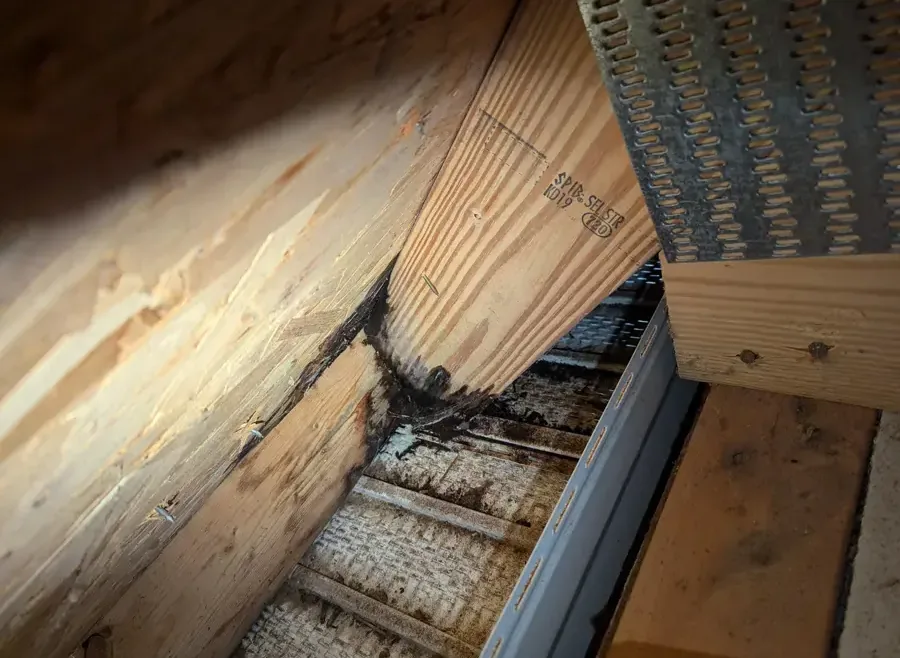
Oak Grove is a city of large lots and tall trees. The township was named for its large groves of oak trees, and a storm shows how close many of those trees stand to a roof.
Key takeaways
- The city describes most of its land as low-density residential neighborhoods with large lot living, so many homes sit near mature trees.
- On August 29, 2024, Hometown Source, citing the National Weather Service, reported large pine trees down blocking a road southeast of Swan Lakes Estate.
- Rain that enters through a damaged roof soaks attic insulation first, then ceiling drywall, then framing.
- Cover the opening and catch water inside, but never climb a roof under a heavy limb or near wires.
- Drying starts as soon as the water is stopped; the roof repair can follow on its own schedule.
Large lots, tall trees and storm wind
Most of the city is low-density residential neighborhoods, with limited commercial areas. The city itself uses the phrase large lot living.
The township was organized in 1857 and named for the large groves of oak trees, and many lots still carry mature trees close to the house.
What the storm reports show
On August 29, 2024, Hometown Source, citing the National Weather Service, reported large pine trees down blocking a road southeast of Swan Lakes Estate.
That report is about a road, not about homes. It still shows how quickly wind turns tall trees into a hazard.
A limb does not have to fall through the roof
A branch can scrape shingles loose, bend flashing or crack a vent boot without leaving a visible hole.
Those small openings often leak only in heavy rain or during a thaw, so the stain on the ceiling can show up days after the storm.
First steps after a tree hits the roof
Safety comes ahead of everything else. A tree on a roof can shift again, and downed wires can be live.
A homeowner who stays calm and follows a short list protects both the family and the house.
The goal is to keep people out of danger, stop more water from entering and record what happened.
- Stay away from the tree and from any wires touching it or the house.
- Move people and pets away from rooms under the damaged area.
- Catch drips with buckets and move furniture and electronics out of the way.
- Photograph the roof damage from the ground and every wet ceiling or wall inside.
- Call a roofer or tree service to cover the opening, and call a water damage team for the inside.
How water moves from the roof into the house
Rain follows gravity and the easiest path. It runs down rafters, soaks attic insulation and then spreads across the ceiling drywall below.
A large lot often means a larger house with a bigger attic, and a bigger attic means more insulation to soak.
Wet insulation holds water against the drywall like a compress, so the damage keeps growing after the rain stops.
- A brown ring or a bubbled patch of paint on the ceiling means water is already in the drywall.
- A sagging section holds water and can fall; keep people out from under it.
- Water can run down inside an exterior wall and show up far from the roof damage.
- Insulation in the attic may stay wet for weeks if it is not removed or dried.
What the drying team removes and what it saves
The team works from moisture readings, not from the size of the stain. The goal is to save as much of the structure as possible.
Opening the ceiling
Wet drywall and insulation are cut out where readings show saturation. Opening the ceiling lets the framing above it dry instead of staying damp behind new paint.
A ceiling leak water damage job often starts with a small opening that grows only as far as the water went.
Drying framing and decking
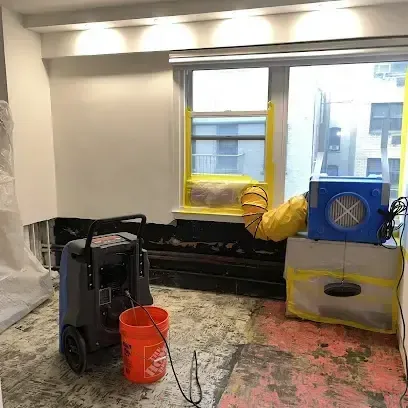
Rafters, roof decking and wall studs are dried with air movers and dehumidifiers. Structural drying continues until the readings match dry reference points.
Why drying should not wait for the roof repair
After a storm, roofers are busy and repairs can take a while. The house should not sit wet during that wait.
Damp drywall and insulation can start growing mold in 24 to 48 hours, which makes early extraction and drying the safer choice.
A roofer may be able to cover the opening quickly and still need weeks to schedule the full repair. The drying does not need to wait for that date.
- A temporary cover stops new water; it does not dry what is already wet.
- Drying equipment can run while the roof is being repaired.
- Waiting turns a small stain into a larger removal job.
- A roof leak water damage team can coordinate with the roofer so the schedules do not collide.
Permits and repair planning
The city has adopted the Minnesota State Building Code and requires permits in conjunction with it. Rum River Consultants provides building inspection services for the city, with online permitting through a platform called Baseline.
A homeowner can ask the city whether a given repair needs a permit before a contractor starts.
- Ask the roofer who is pulling any permit and who schedules any inspection.
- Keep the roofer's invoice and the drying team's moisture log together.
- Photos of the damage before and after cleanup help the records stay clear.
Trees, gutters and the next storm
A storm like this is a good reason to look at the rest of the property. A few small jobs now can limit the next one.
The Oak Grove water damage restoration team sees the same pattern after most wind events: small openings that went unnoticed.
- Have a tree service look at limbs that hang over the roof.
- Clear gutters so water does not back up under the shingle edge.
- Check the attic after heavy rain for damp insulation or stains on the decking.
- Replace cracked vent boots and loose flashing before winter.
Questions
Can the wet ceiling wait until the roof is fixed?
No. Wet drywall and insulation should be dried or removed right away, because waiting lets the damage spread and mold begin to grow.
Should I remove wet attic insulation myself?
It is heavy and hard to judge. A drying team removes it where readings show it is saturated and can check what is behind it.
Who removes the tree?
A tree service removes the tree and a roofer repairs the opening. The water damage team handles the water inside the house.
Is a ceiling stain after a storm always a new leak?
Not always. It may be an old stain, but a fresh stain that grows after rain or thaw is a sign that water is still entering.
How long does the drying take?
Most roof leak jobs dry in a matter of days. The drying team keeps taking readings until the drywall, insulation and framing are back to normal.
What if the leak is in a garage or an outbuilding?
Large lots often come with detached garages and sheds. The same steps apply: stop the water, remove wet materials and dry the framing before closing anything up.