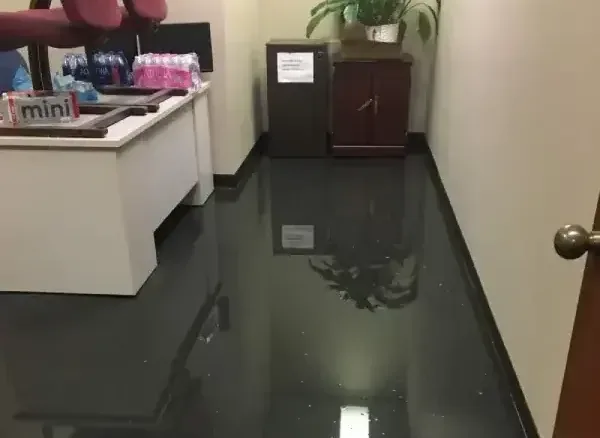
Most commercial services in Ham Lake sit along Highway 65. When water gets into one of those buildings, the cost is counted in closed days as much as in wet drywall.
Key takeaways
- Commercial uses cluster along Highway 65, with 8 platted commercial parks north of Bunker Lake Boulevard.
- The 2040 Comprehensive Plan lists 22 light industrial businesses in one industrial park and 12 in another, mostly in concrete block buildings.
- Concrete block and slab floors hold moisture, so drying is planned with readings instead of guesses.
- With no municipal sewer, businesses rely on septic systems, and some already face significant pumping costs.
- Protect stock and records first, and photograph the damage before anything is moved.
Where Ham Lake businesses sit
Commercial services here are mostly along Highway 65. The city has 8 platted commercial parks along that road, north of Bunker Lake Boulevard.
The 2040 Comprehensive Plan lists 22 light industrial businesses in Ham Lake Industrial Park and 12 in Landborg Industrial Park, mostly in concrete block buildings.
Block buildings and slab floors
Concrete block is a sturdy material, but it is also porous. Water that reaches the base of a block wall can climb into the cores and travel upward.
A slab floor under shelving, counters or machinery hides water, because the floor cannot be seen or lifted easily.
Low ground and the water table
The city sits on the Anoka sand plain, and low areas have a naturally high water table at or near the surface. That makes quick extraction after a storm or a pipe failure more important.
How block walls and slab floors hold water
A wet slab and wet block walls do not dry on their own schedule. They depend on airflow, temperature and humidity.
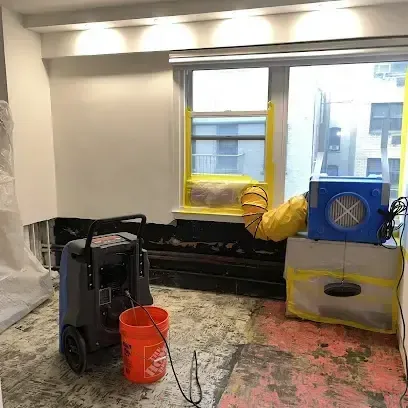
In a large open building, that means drying equipment has to be planned for the whole space, not just the corner that looks wet.
- Water wicks up from the floor into the base of block walls.
- Paint blisters, white salt deposits and a damp smell point to moisture inside.
- Flooring glued to a wet slab can fail weeks later if the slab was not dried first.
- Stock on pallets and low shelves soaks up water faster than most owners expect.
The first day for a business owner
A water event during business hours or overnight puts an owner in a hurry. A calm order of steps keeps the damage from growing.
Businesses, apartments and the mobile home park use non-community public water supply wells, so a burst pipe can also interrupt the water a business depends on.
- Stop the source: shut off the water or the equipment that is leaking.
- Keep staff and customers out of wet areas near outlets or panels.
- Move stock, files and equipment off the floor and away from the wet zone.
- Photograph the damage, the source and every affected item.
- Tell the property manager or landlord right away.
- Call a commercial water damage team to extract water and set up drying.
Septic backups in a business
The city has no municipal sewer system, and businesses use individual or community septic systems. The 2040 Comprehensive Plan says some Highway 65 businesses face significant costs for frequent septic pumping.
That concern does not apply to every business, but a restroom backup in a building on septic is a real possibility.
- A full tank can push sewage into a restroom or a floor drain.
- A septic service checks the tank, and a cleanup team handles the sewage on the floor.
- Customers and staff stay out until the area is cleaned and sanitized.
- A sewage backup cleanup removes porous materials and treats hard surfaces.
Drying plans that keep operations running
A good drying plan thinks about the business, not just the water. The aim is to reopen as much space as safely as possible.
Large floors and block walls are dried in zones, so one part of the building can often stay in use while another dries.
The plan also names who needs to be told: the landlord, the property manager and the staff who open and close.
Zones and containment
Plastic barriers and air scrubbers keep dust and moisture out of areas that are still open. Equipment is placed to dry the wet zone without blowing humid air into the shop floor.
After hours and in stages
Noisy work can be scheduled for evenings or slow days. Structural drying is staged so that rooms return to use as they reach their dry goal.
Records, permits and planning
The city building department issues plumbing, mechanical and septic permits. A repair that touches any of those systems may need one, and the department can answer the question.
A written log of readings, equipment and dates helps the owner, the landlord and the contractors stay on the same page.
It also gives staff a simple answer when someone asks when a room will reopen.
- Ask the building department whether a repair needs a permit before work begins.
- Keep photos, moisture logs and invoices in one folder.
- Record the dates the water was stopped and the equipment was set.
- Share the log with the property manager so repairs follow the drying schedule.
Getting ready before the next leak
A little planning makes the next water event shorter. The Ham Lake water damage restoration team and the broader commercial water damage service can help build a plan for a particular building.
- Know where the shutoff for the water and the water heater is, and tag it.
- Keep stock on shelves above the floor in areas near restrooms and utility rooms.
- Store key records and backups off site or on high shelves.
- Put a leak alarm near the water heater, the break room and any restroom.
Questions
Can a business stay open while the building dries?
Often, in part. Drying is done in zones with barriers, so unaffected areas can stay in use while wet areas are dried.
What happens to concrete block walls after water damage?
Block is usually dried in place, not replaced. The team checks readings in the base of the walls and runs equipment until they return to normal.
Who should be called for a septic backup in a business?
Call a septic service to check the tank and a water damage team to clean up the floor. The two jobs happen together.
How long does it take to dry a commercial floor?
Most take days to about a week. Larger spaces and thicker slabs take longer, and readings decide when the work is done.
What if a burst pipe cuts off the building's water supply?
Businesses here use non-community public water supply wells, so a split pipe can interrupt the supply. Shut off the water, call for extraction and ask a plumber to repair the pipe before the supply is turned back on.
What records should an owner keep?
Photos of the damage, moisture readings, the dates equipment ran and invoices. Together they form a clear record of what happened and what was done.