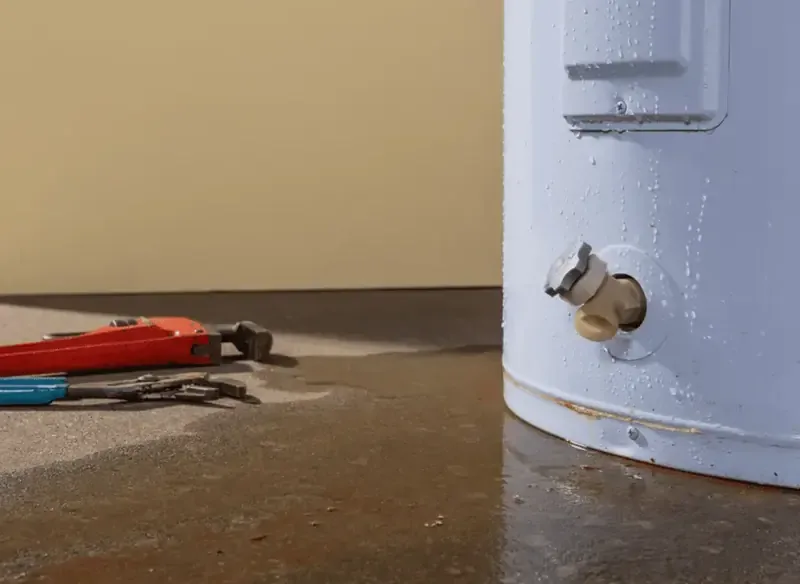
Across Andover, water heaters and softeners usually live in basement utility rooms, right beside finished rooms. When one of them leaks, the water finds the carpet next door.
Key takeaways
- A leaking tank is replaced, not repaired, while a leaking fitting or hose can often be fixed.
- Softeners leak from drain hoses, brine tanks and loose connections, and the water can be salty.
- Shut off the water to the unit and the power or gas before touching anything else.
- A utility room is often near finished space, so water reaches carpet pad and drywall quickly.
- Extraction comes first, then drying with moisture readings; pad and low drywall are the usual removals.
Why the utility room is the weak spot
Most homes here were built from the late 1970s to the 2000s, as ramblers, split-levels and two-stories over full or walkout basements. Many basements are finished, and the utility room is often the unfinished corner beside them.
A water heater and a softener hold or move a lot of water, and they run for years without anyone looking at them.
Equipment ages quietly
Tanks, fittings and hoses wear out slowly. A weep from a fitting can drip for weeks before anyone sees a puddle.
A utility room floor is often bare concrete, so a slow drip may dry before anyone notices, while the wall base beside it stays damp.
On larger rural lots in the north of the city, homes with private wells sometimes use a softener, which gives the utility room one more thing that can leak.
How a water heater leaks
A tank can fail in two ways. It can weep from a fitting or valve, or it can fail at the tank itself.
Gas and electric heaters leak the same way. The difference is how they are shut off and made safe.
- Rust stains at the base or around fittings point to slow seepage.
- A relief valve that drips often signals pressure or age problems.
- Popping or rumbling from the tank can mean sediment buildup.
- Water pooling on the floor on one side of the tank may mean a failing seam.
Weeps from fittings and valves
A drip from the relief valve or a connection is often the first sign. It may be fixable if caught early.
A tank that fails
When the steel tank itself leaks, there is no repair. The tank is replaced, and the water already spilled is cleaned up first.
How a water softener leaks
A softener has more places to leak than most people expect. It has a brine tank, a control valve, hoses and a drain connection.
A softener leak is also often salty, which leaves a residue on carpet and concrete after it dries.
- The brine tank can overflow if a valve sticks.
- A drain hose can pop off or split and spill onto the floor.
- Fittings on the supply side can loosen with vibration or age.
- A bypass valve that is left half open can send water where it should not go.
First steps: shut it down
Stopping the water is the first job. The second is keeping power and gas out of the equation.
Most utility rooms have an electrical outlet or two near the floor, which is why a quick look before wading in is worth the extra moment.
- Close the cold water supply valve to the heater or softener.
- Turn off the breaker for an electric heater, or set a gas heater's control to off.
- Unplug the softener if the cord and outlet are dry.
- Stay out of the water if it is near outlets or the panel.
- Photograph the equipment and the wet floor before anything is moved.
- Lift boxes and belongings off the floor in nearby finished rooms.
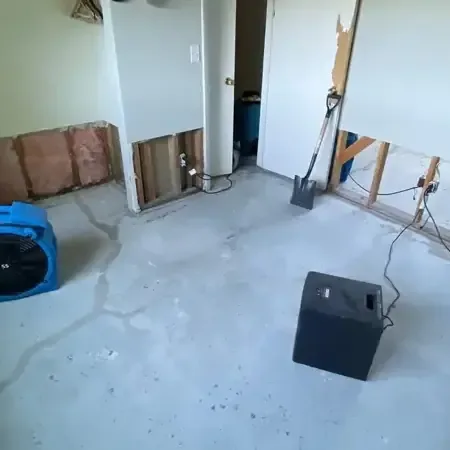
Where the water goes in a finished basement
Water from a utility room does not stay in the utility room. It runs toward the lowest point and seeps under walls into the room next door.
Carpet pad holds water like a sponge. Drywall wicks it upward from the bottom edge, often much higher than the visible stain.
A finished room next to the utility room can look fine while its wall base and pad stay wet for days.
- Through the gap under a wall and into the finished room beside it.
- Along the slab to a floor drain or a low corner.
- Into the bottom plate and studs behind drywall.
- Into stored boxes, cabinets and furniture legs that sit on the floor.
Cleanup and replacement planning
A water extraction crew pulls the standing water first. Then the damaged materials are removed, and the structure is dried with air movers and dehumidifiers.
Structural drying continues until readings return to normal, and the final check is done with a meter.
- Ask a plumber to replace a failed tank and check the supply fittings.
- Add a drain pan under the water heater if there is room.
- Have the softener's hoses and brine valve checked at the same visit.
- Plan the plumbing replacement together with the cleanup so the drying equipment is not interrupted.
Removals in the finished room
Wet carpet pad almost always comes out, and carpet is lifted so the slab can dry. Drywall that has wicked water above the baseboard is cut back to dry material.
Baseboards are removed carefully so they can be reinstalled when possible.
Drying the utility room itself
The utility room slab and the wall bases are dried too, even though they look fine. Readings in the concrete and the bottom plates show whether they still hold water.
When it is more than a puddle
A towel and a fan can handle a small drip. A tank that dumped its contents is a different job.
A water heater leak cleanup team can extract and dry the area before the water reaches the next room. An appliance leak from a softener or washer is handled the same way.
Questions
Can a leaking water heater tank be repaired?
Usually not. A leak in the tank itself means the tank is replaced. Leaking fittings and valves can often be fixed.
Is softener brine a problem on carpet?
It can leave salty residue and stains. The carpet and pad are checked, and wet pad is usually removed.
Should the gas be turned off for a leaking water heater?
Set a gas heater's control to off, and turn off the breaker for an electric one. Then stop the water supply to the tank.
How far can utility room water travel?
Into neighboring finished rooms, under walls, along the slab and up the bottom of drywall. Moisture readings show how far it actually went.
How long does drying take after a water heater leak?
Most jobs take a matter of days. The team keeps taking readings until the slab, framing and drywall are back to normal.
Can a softener leak go down a floor drain?
Yes, and it may hide a leak that is running for a long time. A floor drain that is always damp or a salty smell in the utility room is worth checking.