A sump pump is the quiet machine that keeps a basement dry, and in this part of Anoka County it works harder than most. When it stops, the groundwater it was holding back has nowhere to go but inward.
Key takeaways
- The city sits on the Anoka Sand Plain, where sandy soil and shallow groundwater push water toward basement floors.
- Spring snowmelt raises groundwater, so pumps run hardest when the ground is already full.
- A stalled pump lets the pit overflow, then water seeps up through the slab joint and floor drain.
- Stay away from standing water near outlets and the panel, and shut off power to the area only if it is dry and safe to reach.
- Water is extracted first; carpet pad, low drywall and insulation are checked with moisture readings before anything is closed up.
Why sump pumps work so hard in Andover
Most homes here were built from the late 1970s to the 2000s, as ramblers, split-levels and two-stories over full or walkout basements. Many of those basements are finished.
The ground under them is the Anoka Sand Plain. Sand drains quickly, but it also lets the water table sit close to the surface.
Sandy soil and shallow groundwater
Water does not need a storm to reach a basement here. In sandy soil with many wetlands nearby, groundwater simply rises and presses on the foundation.
Crooked Lake, Round Lake, Bunker Lake and the wetlands of Bunker Hills Regional Park all sit in the same wet landscape, and the Rum River and Coon Creek are part of the same system.
Spring snowmelt and summer downpours
Snowmelt raises groundwater every spring. A pump that coasted through winter can suddenly run without a break.
Summer thunderstorms with downpours add the same kind of load in a shorter burst.
Walkout doors and window wells
Many homes here have walkout basements, where a door opens to the yard at ground level. Meltwater and heavy rain reach that threshold long before they reach a foundation crack.
A pump failure and a walkout leak can happen together in spring, and the cleanup treats them as one flooded basement.
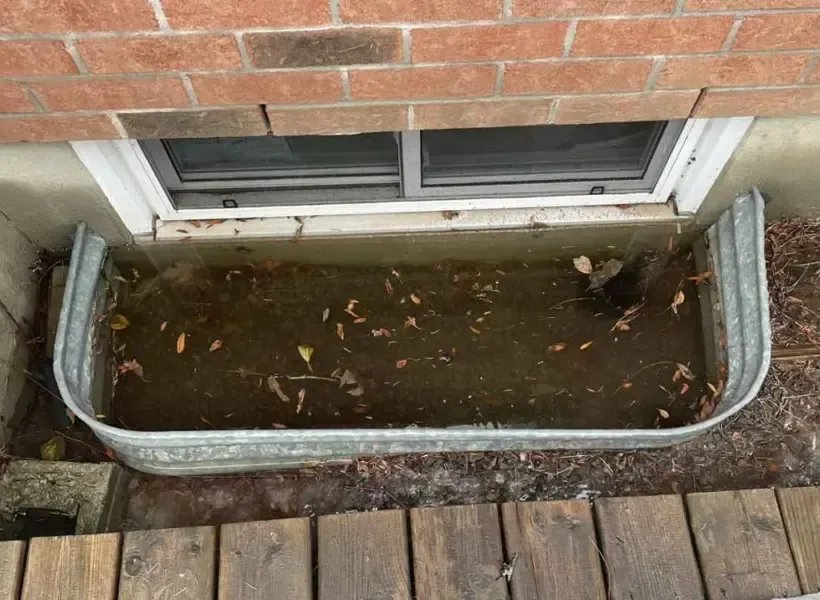
- Clear window wells of leaves and snow, and make sure their drains are open.
- Point downspouts away from the foundation so roof water does not join the groundwater.
- Watch the walkout door threshold during snowmelt for a dark, damp band.
- Keep stored boxes off the floor in any room below grade.
Signs a sump pump is failing or overwhelmed
A pump rarely dies without warning. Most give small signals first, and a homeowner who knows them gets a head start.
- The pump runs without a break, even on dry days.
- It hums or rattles but the water level in the pit does not drop.
- The pit is full to the rim, or the lid is damp from splashing.
- A musty smell or a damp strip of carpet appears along an outside wall.
- The pump is silent after a power outage, or the float arm sticks against the pit wall.
Where the water goes after a pump failure
Water in a basement does not stay where it enters. It looks for the lowest point and the softest material, and a finished space has plenty of both.
What shows on the surface is only part of the story. The wet edge on a wall is usually lower than the moisture inside it.
- Along the slab joint, where the floor meets the wall, groundwater seeps up first.
- Through the floor drain when the drain cannot keep up with the pit.
- Into carpet pad, which holds water like a sponge and keeps it against the slab.
- Up the bottom of drywall by wicking, often well above the visible stain.
- Into bottom plates and studs behind finished walls, where it stays hidden.
First steps when the pump stops
Safety comes before the water. Standing water near outlets, extension cords or the electrical panel is a shock risk.
The goal is to slow the water, protect belongings and get the cause checked.
- Stay out of the basement if water is near outlets or the panel, and call for help.
- Unplug the pump only if the cord and outlet are dry.
- Check the simple causes: a tripped breaker, an unplugged cord, a stuck float or a frozen discharge pipe outside.
- Lift boxes, rugs and furniture off the floor, and photograph the water level.
- Keep a wet vacuum away from outlets; it is for small puddles only.
How extraction and drying work in a finished basement
Groundwater that has sat on a floor for a day is no longer clean, and it does not stay on the surface. It soaks the carpet pad, wicks into the bottom of the drywall and moves into the framing.
Pulling the water out
The extraction crew removes standing water from the slab, the carpet and the pad first. This is the step that stops the damage from climbing the walls.
A water extraction crew works in passes, because wet carpet holds far more than it shows.
Drying what stays
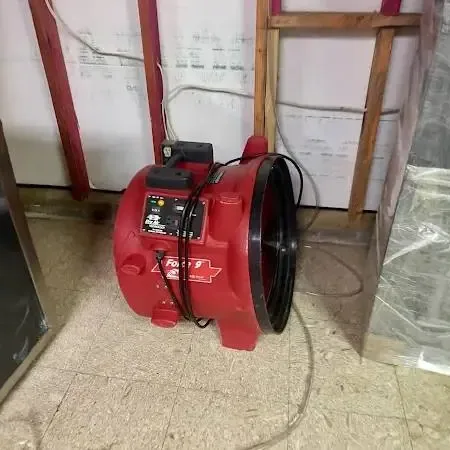
Air movers and dehumidifiers run until readings in the concrete, framing and drywall return to normal. The team checks again before anything is rebuilt.
Wet carpet pad, soaked insulation and drywall that stayed wet for a day or more usually come out. The rest is dried in place.
Fixing the cause before the next thaw
A cleanup does not help if the pump fails again in the next heavy melt. The pump, the float, the check valve and the discharge route all deserve a look.
The sump pump readiness check walks through the main points a homeowner can test.
- Pour a bucket of water into the pit and watch that the pump starts and clears it.
- Make sure the discharge pipe ends away from the foundation and is not blocked or frozen.
- Clean the pit of silt and debris that can jam the float.
- Ask a plumber about a battery backup for outages and an older pump nearing the end of its life.
When a pump failure becomes a basement flood
A small puddle by the pit can be handled with towels and a fan. Water across a finished floor is a different job.
When carpet is soaked or water is spreading toward a finished wall, a basement flooding cleanup team can extract and dry before the damage reaches the framing. Waiting a day or two gives mold the start it needs.
Questions
How long can a basement stay wet after a sump pump fails?
Drying should start in the first day or two. Mold can begin to grow in 24 to 48 hours on damp drywall and carpet pad.
Why did the basement take on water when it was not raining?
On the Anoka Sand Plain the water table can rise on its own, especially after snowmelt. A pump that stalls then lets groundwater in with no storm at all.
Can a wet vacuum handle the water?
A wet vacuum suits a small puddle. It is not meant for a flooded finished floor, and it should never be used near wet outlets.
What if the pump runs but the water keeps rising?
The pump may be overwhelmed, the discharge pipe may be blocked or frozen, or the check valve may be letting water drain back. A plumber can test each one.
What gets removed from a finished basement after a pump failure?
Wet carpet pad, soaked insulation and low drywall are the usual removals. Concrete, framing and subfloor are dried in place and checked with a moisture meter.
Does a battery backup pump solve the problem?
It helps during a power outage, but it does not fix a worn pump, a blocked discharge pipe or a pit that is too small for a heavy melt. The whole system needs a check.